
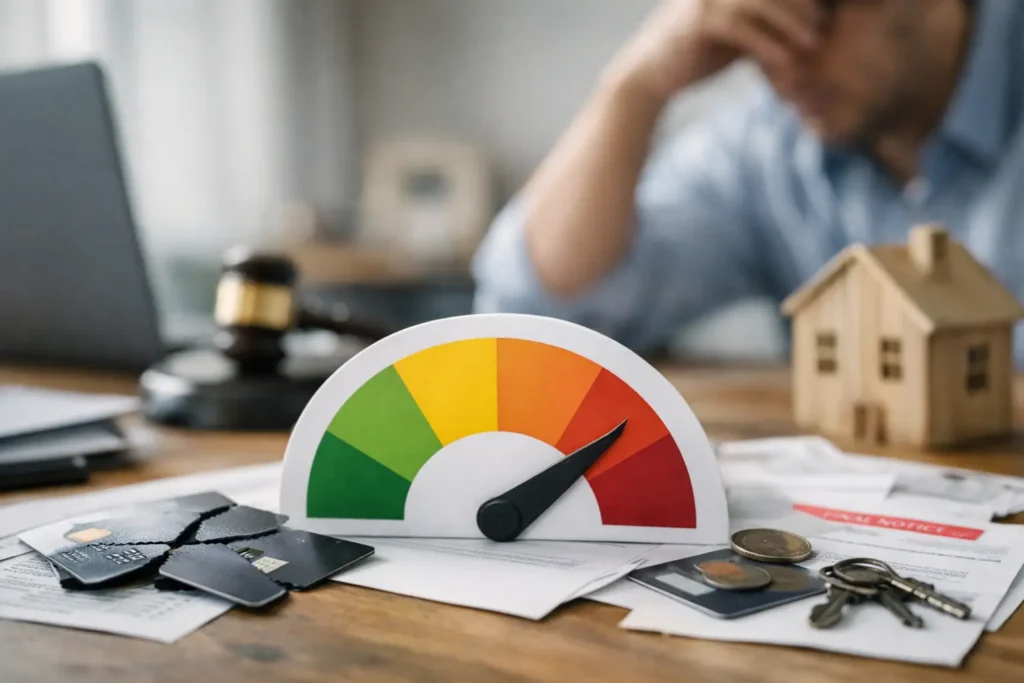
A lot of people think bad credit comes from one big mistake. Usually, it comes from a few specific problems that hit hard and stay on your report long enough to keep dragging your score down. If you are wondering what hurts credit score the most, the short answer is this: missed payments, maxed-out cards, collections, charge-offs, and serious derogatory marks do the most damage fastest.
That matters because credit scores do not just affect whether you get approved. They affect your rate, your deposit, your insurance costs, and sometimes whether you get the apartment you want. When your score is already under pressure, even one more negative item can feel like a wall going up in front of you.
What hurts credit score the most in real life
Payment history usually carries the most weight. That means late payments, especially those reported 30 days or more past due, can hurt more than people expect. A single late payment can be damaging. Multiple late payments across different accounts can be far worse, because they suggest an ongoing pattern rather than a one-time slip.
The severity matters too. A payment that is 30 days late is bad, but 60, 90, or 120 days late tells lenders the problem is getting worse. Recent late payments also tend to sting more than older ones. So if you are trying to protect your score, preventing one current delinquency is often more valuable than stressing over an old item that is already aging.
Credit utilization is another major factor. This is the percentage of your available revolving credit that you are using. If your cards are close to maxed out, your score can drop even if you have never missed a payment. High balances signal risk. They make it look like you are stretched thin, and scoring models tend to respond quickly to that.
Then there are collections and charge-offs. These are among the most damaging items because they show a debt went seriously unpaid. A collection account tells lenders an unpaid bill was handed off for recovery. A charge-off means the original creditor gave up on collecting it as agreed and wrote it off as a loss. Either one can weigh down a report and make approvals harder.
Public records and major derogatory events can be even more serious depending on the file. Bankruptcies, foreclosures, repossessions, and certain judgments can cause deep score drops because they point to severe financial distress. Not every consumer has these issues, but when they do appear, they often become the biggest obstacle on the report.
The worst offenders, ranked by impact
If you are looking for the biggest credit score killers, start with missed payments and serious delinquencies. Those usually do the most immediate damage. Right behind them are collections, charge-offs, repossessions, and bankruptcies. High credit card balances are also a major problem, especially because they can hurt fast and across multiple accounts at once.
Hard inquiries matter, but not in the same way. One or two usually cause a small, temporary dip. The bigger issue is when someone applies for credit repeatedly in a short period, especially if their file is already weak. That can compound the damage and make lenders nervous. Still, compared with a 90-day late payment or a fresh collection, inquiries are usually not the main reason a score is struggling.
Closing old credit cards can also hurt, but this is more of an indirect problem. If you close an account with a high limit, your total available credit drops. That can push your utilization up overnight. So while the closure itself may not be the worst event, the aftereffect on your balances can be.
Why late payments hit so hard
Late payments hurt because they go straight to the question every lender cares about most: will you pay on time? A high balance can be fixed quickly. An inquiry loses impact with time. But a reported late payment becomes part of your history and can stay visible for years.
There is also a difference between being a few days late and being reported late. Most creditors do not report to the bureaus until you are at least 30 days past due. That means if you catch the payment before it crosses that line, you may avoid lasting score damage. Once it is reported, though, the damage is harder to reverse.
This is where many consumers get stuck. They assume making the account current erases the problem. It helps, but it does not remove the late mark by itself. The account may now show as current, while the prior delinquency remains on the report. That is why acting early matters so much.
Why maxed-out cards can drop your score fast
High utilization is one of the few score problems that can often be improved quickly, but it can also surprise people because the drop happens even when they are paying on time. If one card is at 95 percent of its limit, or several cards are heavily used at once, the scoring model may read that as elevated risk.
Both overall utilization and per-card utilization matter. Someone using 40 percent across all cards may still see score damage if one card is completely maxed out. This is one of those areas where small changes can help. Paying balances down before the statement date can sometimes improve what gets reported.
The trade-off is that not all debt behaves the same way. Installment loans like auto loans and mortgages do not affect utilization the way credit cards do. So when people ask what hurts credit score the most, the answer depends partly on account type. Revolving debt tends to pressure scores more quickly through utilization.
Collections, charge-offs, and old mistakes that keep costing you
Collections and charge-offs are especially frustrating because they can follow you long after the original payment problem. Even if the debt started as a small medical bill or a single missed account, once it becomes a derogatory item, the impact can be much larger than people expect.
There is also nuance here. Some newer scoring models treat paid medical collections differently than older models, and some lenders use different versions entirely. So paying an account may help in one lending situation and not move the needle much in another. That is why consumers often feel confused when they do the right thing and do not see the score jump they expected.
Accuracy matters too. If a collection, late payment, charge-off, or hard inquiry is inaccurate, duplicated, outdated, or not fully verifiable, it may be possible to challenge it. This is where professional help can make a real difference. A company like Express Credit Boost focuses on identifying negative items that may be removed so clients can start seeing results faster instead of trying to decode the bureau process alone.
What hurts your score less than people think
Checking your own credit does not hurt your score. That is a soft inquiry, not a hard one. Paying off an installment loan also does not automatically damage your credit, though your score can shift when an account closes and your credit mix changes.
Using your card and paying it off every month is not a problem either. In fact, active positive accounts can help build history over time. The real issue is carrying high balances, missing due dates, or letting negative items pile up without a plan.
How to stop the damage before it gets worse
If your score is under pressure, focus first on current accounts. Bring anything past due current before it turns into a reported delinquency. Next, work on lowering credit card balances, especially cards that are near their limits. Then review your reports closely for collections, charge-offs, and inquiries that should not be there or are being reported inaccurately.
Do not assume every negative item is permanent or correct. Credit reports can contain errors, and even accurate items may deserve a closer look depending on how they are being reported. The sooner you identify the biggest score killers on your file, the sooner you can decide whether to handle them yourself or get expert help.
Bad credit rarely comes from bad luck alone. It usually comes from a handful of high-impact items that were left unresolved for too long. Once you know what is doing the most damage, you can stop guessing and start making moves that actually change your options.