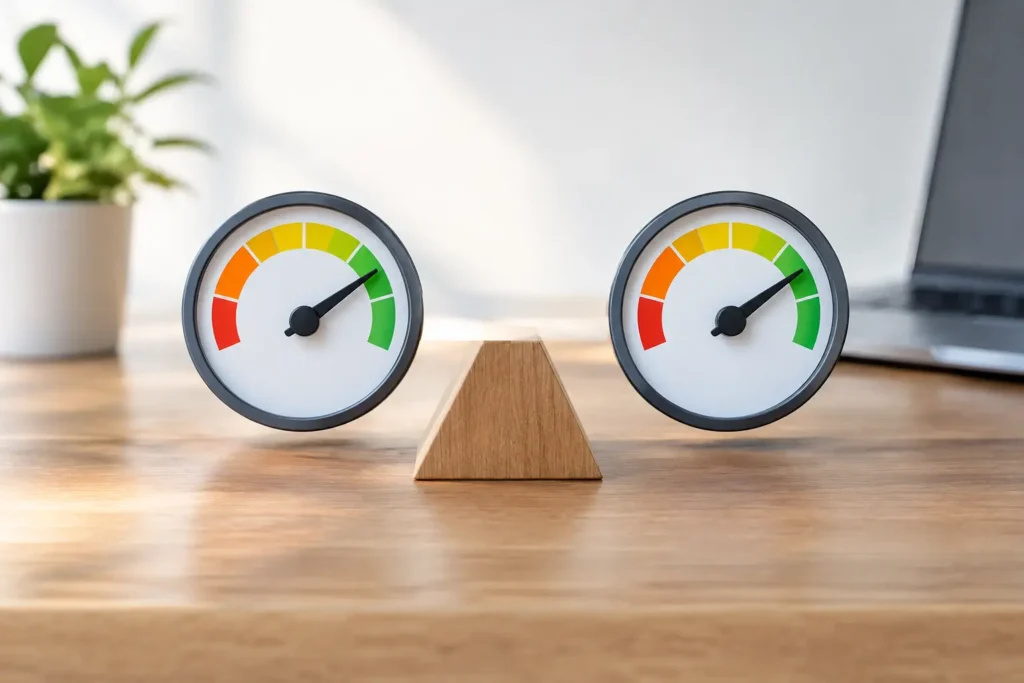
A credit app can show a score that looks solid, yet a lender may quote a different number when you apply for a car loan or mortgage. That does not automatically mean your report changed overnight. The difference often comes down to FICO versus VantageScore – two scoring systems that can read the same credit file and produce different results.
For anyone working to recover from late payments, collections, charge-offs, or high card balances, the distinction matters. Your score is not just a number on a screen. It can affect whether you are approved, how much you can borrow, your interest rate, and how much you pay over the life of a loan.
What Is FICO?
FICO is the credit scoring model most people recognize, and it remains widely used by lenders. FICO scores are calculated from information in your credit reports from Equifax, Experian, and TransUnion. Most commonly used FICO scores fall between 300 and 850, with a higher score generally signaling lower lending risk.
FICO does not have just one score. There are general-purpose scores and industry-specific versions designed for auto lending, credit cards, and mortgages. A mortgage lender may use a different FICO version than a credit card issuer, which is one reason the score you see in a consumer app may not match the score used in your application.
FICO generally focuses on five broad areas: payment history, amounts owed, length of credit history, new credit, and credit mix. Payment history and how much of your available revolving credit you are using tend to carry substantial weight. A single late payment, collection account, or maxed-out credit card can do real damage, especially when your profile has limited positive history to offset it.
What Is VantageScore?
VantageScore was created by the three major credit bureaus as an alternative scoring model. Like FICO, it uses information found in your credit report and most VantageScore versions use the familiar 300 to 850 range.
VantageScore evaluates many of the same behaviors: whether you pay on time, how much debt you carry, how old your accounts are, and whether you have recently applied for new credit. But it weighs and interprets those factors differently. It can also score some consumers with a shorter credit history than certain older FICO models can.
You are likely to encounter VantageScore through free credit-monitoring services, banking apps, and educational credit dashboards. That access is useful. It gives you a way to track report changes and watch the direction of your credit health. Still, it is not always the score your lender will pull.
FICO Versus VantageScore: Why Your Numbers Can Differ
The biggest source of frustration is seeing two legitimate scores that are far apart. Both can be accurate calculations based on your file at a particular time. They simply use different formulas, versions, bureau data, and update timing.
For example, one score may react more strongly to a recently reported high credit card balance. Another may place more emphasis on the age of your accounts or your pattern of recent credit applications. If one bureau has an account that another bureau does not, your scores can differ before the scoring model even enters the picture.
A score can also change because your lender pulls a bureau you do not monitor regularly. Your Experian-based score may look better than your TransUnion-based score if a disputed collection, late payment, or balance is reporting differently between the bureaus.
That is why chasing one exact score can distract from the real goal: building a credit report that holds up under lender review. Accurate positive accounts, low revolving utilization, on-time payments, and the removal of reporting errors can strengthen your position across scoring models.
Which Score Do Lenders Actually Use?
It depends on the lender and the type of financing. Many lenders use FICO scores, particularly in traditional lending decisions. Mortgage lending has historically relied heavily on specific FICO versions, while auto lenders and credit card issuers may use specialized FICO models or other proprietary risk tools.
VantageScore is also used by lenders, but its consumer visibility is greater than many people realize. Seeing a VantageScore does not mean it is worthless. It is a valid snapshot of your credit profile. It simply may not be the same snapshot a particular lender uses to make an approval decision.
Before a major application, ask the lender what credit bureau and scoring model they use if they are willing to share it. You may not always get a detailed answer, but knowing whether they review one bureau or all three can help you prepare.
For mortgage applications, lenders may evaluate more than one score and may base their decision on a middle score or the lower score between applicants, depending on the loan program. If you are applying with a spouse or co-borrower, both credit profiles can matter. Waiting until the last minute to check for errors can cost you options.
What Matters More Than the Score Model
When your report contains negative information, the scoring model is not the main problem. The underlying account is. An inaccurate late payment can hurt FICO and VantageScore. A collection that does not belong to you can hurt both. High utilization can pull down scores across the board.
Start by reviewing all three credit reports, not just the score displayed in an app. Look for accounts you do not recognize, duplicate collections, incorrect balances, late payments that conflict with your records, and closed accounts reporting inaccurate details. These issues can affect your borrowing power even when your score seems acceptable.
Next, focus on current behavior. Bring revolving balances down where possible, make every payment on time, and avoid opening unnecessary accounts before a major loan application. Do not close an older credit card simply because you paid it off unless you have a clear reason. Closing an account can reduce available credit and raise your utilization percentage.
Be careful with the idea that every negative item can be removed. Accurate, verifiable information may remain for the reporting period allowed by law. However, credit reports do contain errors, incomplete documentation, outdated reporting, and accounts that deserve a closer review. When the stakes involve a home, vehicle, rental approval, or lower interest rate, getting the facts right matters.
When Professional Credit Help May Make Sense
Credit disputes can be time-consuming, especially when several accounts are reporting across multiple bureaus. You may be dealing with medical collections, old charge-offs, identity-related accounts, or late-payment reporting that you believe is wrong. In those situations, a structured review can help you identify what is reporting, what is potentially inaccurate, and what steps are available.
Express Credit Boost works with consumers who want hands-on support reviewing negative credit report items and pursuing appropriate disputes. The goal is not to promise a magic score number. It is to help create a cleaner, more accurate credit profile that gives you a better chance when lenders review your application.
Focus on the Report Behind the Number
FICO and VantageScore are different tools measuring much of the same financial behavior. Neither score tells your full story, and neither one should be viewed in isolation. A lender may consider your income, debt-to-income ratio, payment history, available cash, and the details of the loan itself along with your score.
If a loan, home purchase, or fresh financial start is on your horizon, do not wait for a score alert to tell you there is a problem. Review your reports, address inaccuracies, protect your on-time payment record, and give positive changes time to report. That is how you take control of the credit profile lenders are actually evaluating.