
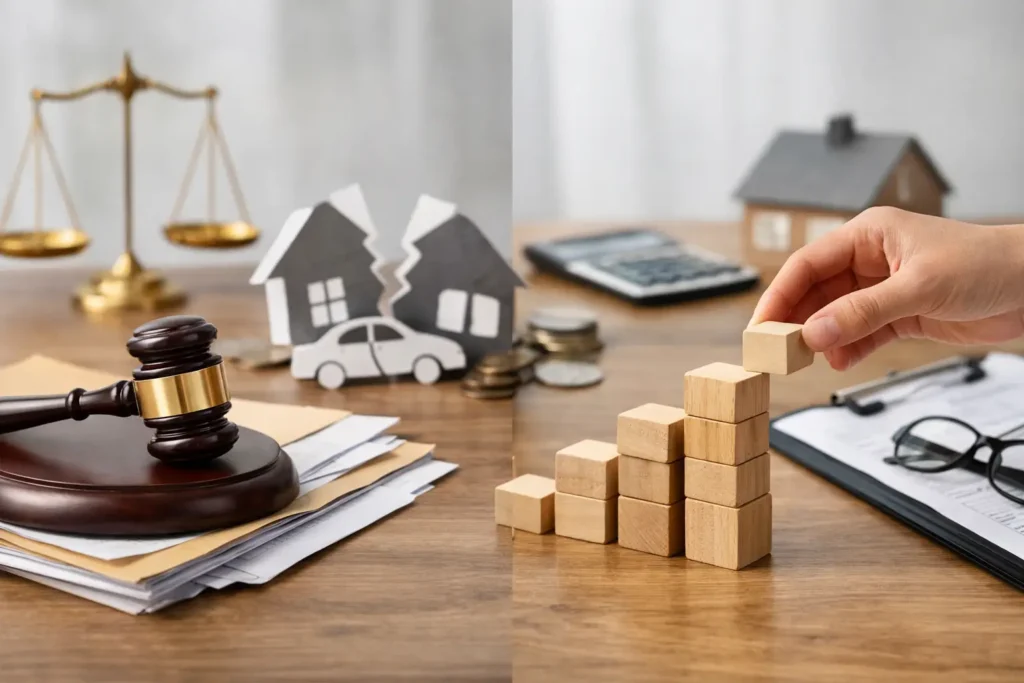
When bills keep piling up and your credit score keeps dropping, the question of bankruptcy vs credit repair stops being theoretical fast. It becomes personal. You may be trying to qualify for a car, rent an apartment, refinance debt, or buy a home, and bad credit is standing in the way. The right move depends on what kind of problem you actually have – too much debt, inaccurate negative items, or both.
That distinction matters because bankruptcy and credit repair are not substitutes in every case. They solve different problems, create different consequences, and move on very different timelines. If you choose the wrong one, you can lose time, money, and opportunities you were trying to protect.
Bankruptcy vs credit repair: the core difference
Bankruptcy is a legal process designed to help people who cannot realistically repay their debts. It can stop collection activity, wipe out certain unsecured debts, and give you a financial reset. But it also becomes a serious public record event that can stay on your credit report for years.
Credit repair is different. It is not a debt elimination tool. It focuses on reviewing your credit reports, identifying questionable, inaccurate, outdated, or unverifiable negative items, and challenging those items through the proper process. The goal is to improve the accuracy of your credit profile and help your score recover faster.
If your main issue is overwhelming debt you truly cannot pay, bankruptcy may be the more realistic option. If your main issue is damaged credit from negative reporting that should not be there, is being reported incorrectly, or has not been properly verified, credit repair may be the better path.
A lot of consumers actually face a mix of both. That is where careful evaluation matters most.
When bankruptcy makes sense
Bankruptcy is serious, but serious does not always mean wrong. For some people, it is the cleanest way to stop a financial spiral.
If you are behind on multiple accounts, facing lawsuits, dealing with wage garnishment, or unable to cover basic living expenses while making debt payments, bankruptcy may offer relief that credit repair cannot. Credit repair cannot erase legitimate debt balances. It cannot stop legal action by itself. It cannot replace a court-supervised debt discharge.
Chapter 7 bankruptcy is often used by people with limited income who need a faster discharge of qualifying debt. Chapter 13 is more of a court-approved repayment plan. Which chapter applies depends on income, assets, debt type, and state-specific factors.
The trade-off is long-term credit impact. A bankruptcy can remain on your credit report for up to 10 years, depending on the chapter. Lenders may view it as a major risk factor, especially in the early years after filing. You may still rebuild after bankruptcy, but the road is usually more restrictive at first, with higher rates and fewer approvals.
That does not mean your credit life is over. It means bankruptcy should be used because it solves a real debt crisis, not because it feels like a shortcut.
When credit repair makes more sense
Credit repair makes sense when your report is holding you back more than your current debt load is. That can happen more often than people realize.
Maybe you paid a collection but it is still being reported incorrectly. Maybe a late payment is wrong. Maybe hard inquiries were added without proper authorization. Maybe a charge-off is reporting with inaccurate dates or balances. Maybe a medical bill should have been updated or removed. In those cases, the issue is not just debt. The issue is how your credit history is being reported.
That is where credit repair can create real movement. By challenging negative items that are inaccurate, incomplete, outdated, or unverifiable, you may be able to clean up the report you are presenting to lenders. Better reporting can mean better scores, stronger approval odds, and less stress every time someone pulls your credit.
This approach is especially useful for people who still have income, can manage their obligations with a plan, and want to avoid the lasting public mark of bankruptcy. It is also attractive for borrowers trying to become mortgage-ready, auto-loan ready, or rental-application ready in a shorter timeframe.
At Express Credit Boost, this is where many consumers find momentum. They do not necessarily need a courtroom solution. They need experienced, hands-on help addressing the negative items dragging their profile down.
Bankruptcy vs credit repair for your credit score
People often assume bankruptcy automatically fixes their score because it removes debt pressure. That is only partly true.
Bankruptcy can improve your debt-to-income reality and may reduce the burden of past-due accounts, but it also adds one of the most damaging entries a credit report can carry. Some consumers see score stabilization after filing because active delinquencies stop getting worse, yet the bankruptcy itself remains a major negative factor.
Credit repair works differently. It does not create one large event on your report. Instead, it aims to remove or correct harmful items that may be suppressing your score. If successful, that can lead to score improvement without the severe long-term weight of a bankruptcy filing.
Results depend on what is being challenged and what gets updated or removed. No honest company should promise the same outcome for every file, because every credit report is different. But when the right negative items are addressed, the impact can be meaningful.
Timing matters more than most people think
If you need immediate protection from collectors or lawsuits, bankruptcy may move faster in the area that matters most – relief from pressure. That legal protection can be critical.
If your goal is credit improvement for financing, housing, or better terms, credit repair may be the smarter timing play. Bankruptcy can pause the bleeding, but it may also push major lending goals farther out. A mortgage lender, for example, may require waiting periods after bankruptcy. If your report problems are repairable without filing, avoiding bankruptcy could protect future options.
This is why rushing into bankruptcy out of panic can backfire. Once you file, you cannot take it back just because you later discover your report also contained errors that should have been challenged first.
Questions to ask before choosing
Before deciding between bankruptcy and credit repair, be honest about your situation. Are your debts truly unmanageable even with a realistic budget? Are collectors escalating? Are most of your negative items accurate, or do you see reporting errors? Do you need debt elimination, credit correction, or both?
You should also think about your next financial goal. If you want to buy a home, qualify for a better auto loan, or move into a new rental soon, preserving your future approval chances matters. The cheapest-looking option today is not always the one that costs you the least over the next two years.
There is also an emotional side to this decision. A lot of people feel shame around bankruptcy and frustration around credit repair because the process can seem confusing. Neither feeling should make the choice for you. The better question is simple: which option solves the actual problem with the least long-term damage?
Can bankruptcy and credit repair work together?
Yes, sometimes they can.
If you have already filed bankruptcy, credit repair may still help you address inaccurate post-bankruptcy reporting. Accounts included in bankruptcy should be updated correctly. Balances, statuses, dates, and remarks should all be accurate. If they are not, those reporting issues can continue hurting your score more than necessary.
If you are considering bankruptcy but have not filed yet, it may be worth reviewing your reports first. Some consumers discover that part of their credit damage comes from fixable reporting problems, not just debt itself. That does not eliminate the need for bankruptcy in every case, but it can clarify whether filing is truly necessary.
The better choice is the one that matches the problem
Bankruptcy vs credit repair is not really a debate about which option is stronger. It is a question of fit. Bankruptcy is built for debt relief when the financial pressure is beyond what you can realistically manage. Credit repair is built for improving the accuracy and strength of your credit profile so you can move forward faster.
If your debt is crushing and there is no workable path to repay it, bankruptcy may be the reset you need. If your credit report is the bigger obstacle, and negative items may be challenged or corrected, credit repair may protect more of your future while helping you start seeing results sooner.
The smartest next step is not guessing. It is getting clear on what is actually hurting your credit, what can be fixed, and what kind of solution gives you the best chance to regain control. Financial recovery starts when the plan matches the problem.